GOT MOLD ?
Don't Take Chances! Call the Top Mold
Remediation Company in Snohomish and get cleaned up FAST!



Why Choose Us?
- Certified Pros
- Available 24/7/365
- Rapid Response
- Fully Licensed And Insured
- We Work With Your Insurance Company
Call Now (360) 203-0590
Snohomish Mold Remediation Services
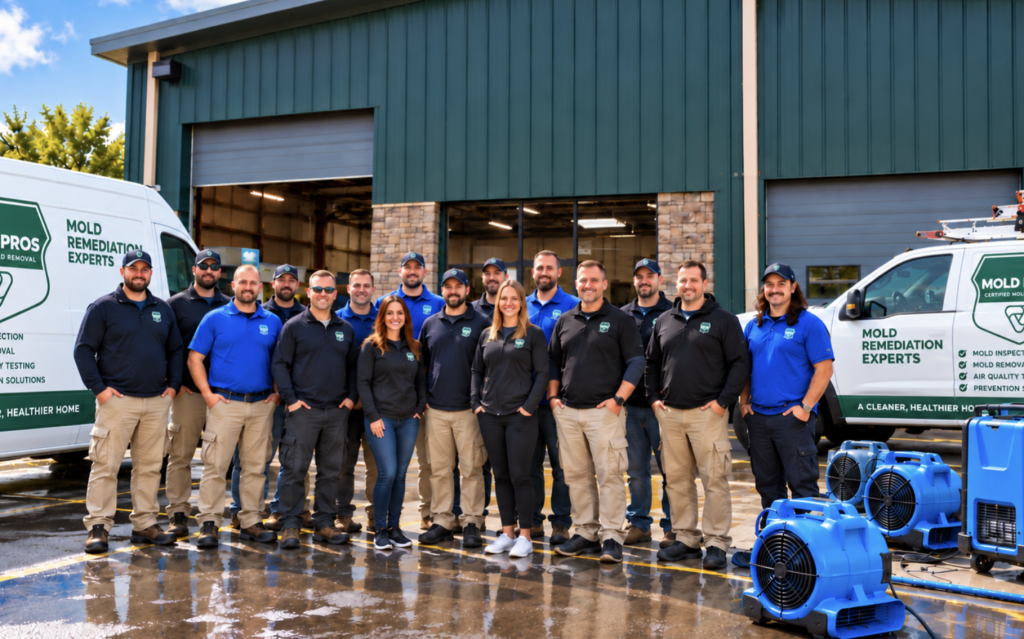
Mold problems often begin with moisture that stays hidden behind walls, under floors, or in crawl spaces. Snohomish Mold Remediation Pros helps homeowners and businesses address the source, affected materials, and indoor spread. Our team serves homes, apartments, condos, offices, schools, churches, medical facilities, retail properties, and industrial buildings. We are IICRC certified and BBB registered. If you notice a musty odor, staining, or recurring moisture, we can help you understand what needs attention.
Why Mold Service Is Commonly Needed in Snohomish
- Roof and flashing leaks: Rain can enter attics, ceilings, and wall cavities through damaged roofing or failed flashing.
- Gutter and downspout problems: Overflowing gutters can send water toward siding, foundations, and crawl spaces.
- Crawl space moisture: Exposed soil, drainage problems, and limited airflow can keep joists and subfloors damp.
- Poor bathroom ventilation: Showers create lasting moisture when fans are missing, undersized, or not exhausting outdoors.
How Local Building Conditions Affect Mold Risk
Snohomish receives rain throughout the year, with wetter conditions generally lasting from October through March. Wind-driven rain, roof drainage problems, and plumbing leaks can affect both newer and older buildings. Historic homes and downtown properties often contain wood framing, wall cavities, flooring, and finishes that need careful handling. We look at the building materials and moisture pattern instead of treating every visible spot the same way.
Crawl spaces are a common concern in local single-family homes and older properties. Moisture below the floor can affect subfloors and framing even when rooms above look normal. Condensation also develops in bathrooms, kitchens, laundry areas, exterior walls, and around poorly insulated surfaces. Properties near the Snohomish and Pilchuck Rivers should use official flood maps to check site-specific flood information rather than relying on the city name alone.
What Our Mold Remediation Service Helps Address
Our work focuses on mold cleanup, removal of affected porous materials, and moisture-related building concerns. Porous materials include drywall, carpet, insulation, and other materials that soak up water. Materials with limited contamination might be cleaned, while heavily affected materials often need removal. We also use containment, meaning plastic barriers that help keep mold dust from spreading, and HEPA air scrubbers that filter particles from the work area.
Mold can appear in attics, crawl spaces, walls, floors, and basements. It can follow a roof leak, appliance leak, plumbing problem, drain backup, or prolonged indoor humidity. We pay attention to concealed areas when staining or odor suggests moisture has moved beyond the visible surface. After affected materials are addressed, the moisture source still needs correction so the problem does not return.
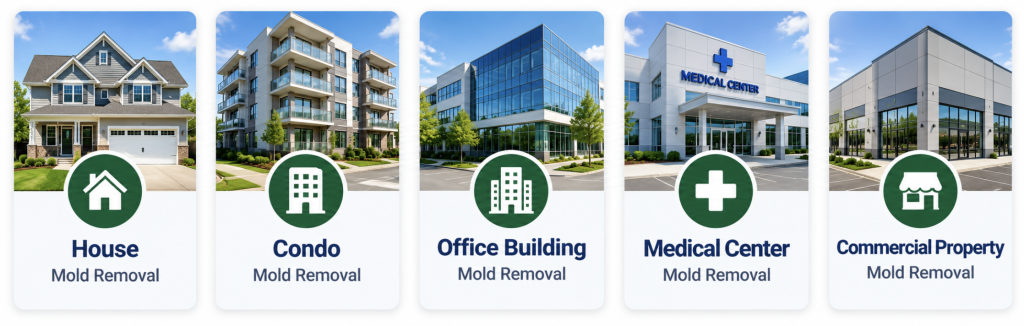
Our service supports both residential and commercial properties. Apartments and condos may involve shared walls, neighboring units, or building-wide plumbing concerns. Offices, schools, churches, medical facilities, and retail spaces may also need work planned around occupants and daily operations. Larger industrial or mixed-use buildings often require careful separation of work areas from unaffected spaces.
Where to Find More Help and Guidance
Our mold removal page explains the cleanup process, containment, affected materials, job size, timing considerations, and reconstruction boundaries in greater detail. Our mold warning signs page covers visible clues, moisture steps, testing questions, prevention, and limits on do-it-yourself cleanup. These pages help you focus on the issue before work begins. You can also review Washington State Department of Health mold guidance for general information about moisture, ventilation, crawl spaces, and cleanup.
Renters and landlords have additional questions about leaks, ventilation, and building responsibilities. Washington State Department of Health provides guidance for renters and landlords, while Washington law addresses certain landlord duties for residential properties. Local flood conditions should be checked through Snohomish County flood-hazard and flood-risk mapping resources. These public resources do not replace a property-specific evaluation, but they can help clarify what information to gather.
Credentials and Service Area
Snohomish Mold Remediation Pros is IICRC certified and BBB registered. We work with property owners who need practical help after leaks, drainage problems, flooding, condensation, or hidden moisture. Our service area includes Snohomish and nearby Everett, Monroe, Lake Stevens, and Woodinville. We also serve properties in the Historic District, Pilchuck District, and Midtown District when the project location is within our coverage.
Older buildings may require more careful protection of finishes and framing during cleanup. Rural-residential and agricultural properties may have different drainage, crawl-space, or access conditions than homes in town. Mixed-use buildings can have moisture concerns that cross residential and commercial areas. Sharing these details early helps us understand the building before discussing the work.
If you see active water, shut off the source if it is safe and move belongings away from the affected area. Call (360) 203-0590 to speak with our team about the moisture problem and the property location. We will ask what you noticed, where the water or odor appears, and whether the area is still getting wet. That conversation helps identify the information needed for the next step without promising a scope before the property is assessed.
Frequently Asked Questions
Can mold be hidden even when I only see a small spot?
Yes, a small visible area does not always show the full moisture path. Water can move behind drywall, beneath flooring, or into framing and insulation. Musty odors, staining, peeling finishes, and recurring dampness can point to a concealed problem. Avoid painting over the area until the moisture source and affected materials are addressed.
Do older Snohomish buildings need special mold cleanup planning?
Older buildings often contain wood framing, finished surfaces, and wall cavities that need careful protection. Historic properties may also have preservation concerns during removal and cleanup. The work area should be separated from unaffected rooms to limit dust movement. A property-specific assessment helps identify materials that need cleaning, removal, or further evaluation.
What should I do if a crawl space smells musty?
Check for standing water, damp soil, plumbing leaks, blocked vents, and wet insulation if the area is safe to enter. Do not disturb suspected moldy material without suitable protection and dust control. Persistent crawl-space moisture can affect joists and subfloors above it. Correcting the moisture source is as important as addressing visible growth.